
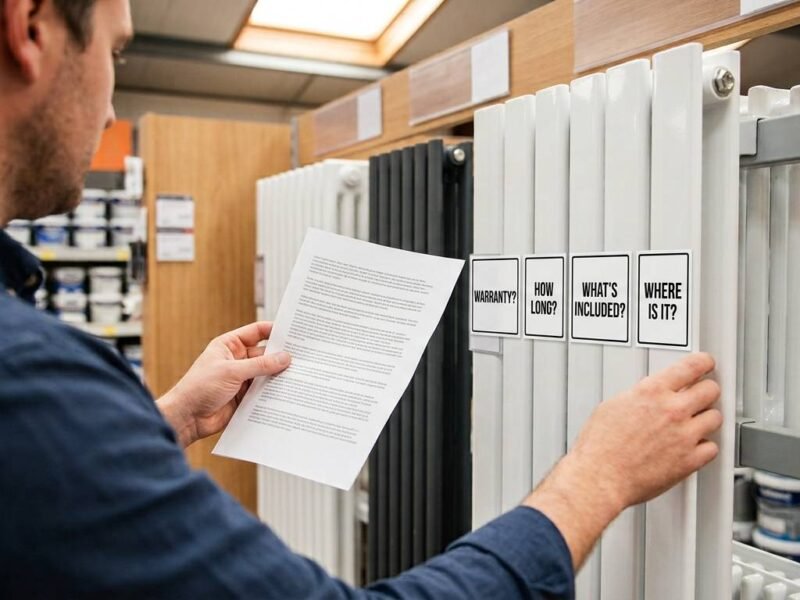

Buying new radiators involves more than choosing the right size, heat output and style. The warranty also deserves careful attention because it explains what protection you receive if a product develops a fault and what responsibilities you may have as the owner.
When comparing radiators with a long warranty, look beyond the number of years shown on the product information. A longer period can provide reassurance, but its real value depends on what is covered, what is excluded and whether you need to meet specific installation or maintenance conditions.
How Long Does the Warranty Actually Last?
The first question is the most obvious: how long is the radiator covered?
Warranty periods can differ between manufacturers, product ranges and radiator types. Do not assume that every product from the same manufacturer has identical cover. A standard panel radiator, designer model, towel radiator or electric radiator may have different terms.
You should also check when the warranty period begins. In most cases, it will be linked to the purchase or delivery date, but the written terms should make this clear.
Keep your receipt, invoice or other proof of purchase in a safe place. You may need it later to show when and where the radiator was bought.
What Parts and Problems Does the Warranty Cover?
A long warranty is less useful if its coverage is very narrow. Read the terms to find out exactly what types of faults qualify.
Radiator warranties commonly focus on defects caused by manufacturing, materials or assembly rather than every problem that might occur during the product’s life. Damage caused after purchase may therefore fall outside the warranty.
Check whether the cover applies only to the radiator itself or also includes particular components supplied with it. If valves, controls or other accessories are bought separately, they may have their own warranty terms.
It is also worth asking what the manufacturer will provide if a valid claim is accepted. Depending on the warranty, this could involve replacement parts, repair or replacement of the affected product. Never assume labour, removal, refitting or other associated costs are included unless the terms specifically say so.
Are There Installation Conditions?
Check whether the warranty includes specific installation requirements. Incorrect fitting, unsuitable connections or failure to follow the manufacturer’s instructions could affect a future claim.
If you are unsure, ask a competent heating professional to install the radiator, especially when existing pipework or the wider heating system needs to be changed.
Does the Heating System Need Particular Care?
The condition of the central heating system can directly affect radiator life. Internal corrosion, sludge and contamination are not necessarily signs of a manufacturing defect.
For this reason, warranty terms may include conditions concerning system cleaning, flushing and protection. Correct water treatment helps protect radiators, pipes and other components from corrosion and deposits.
Before buying, check the written terms for requirements relating to system water and ongoing protection. If an older heating system is being upgraded, ask your heating engineer whether it should be cleaned or treated when the new radiators are installed.
Maintaining the wider system correctly is important regardless of warranty requirements because the radiator does not operate independently from the rest of the heating installation.
Are Certain Rooms or Conditions Excluded?
The intended location of a radiator can matter because different rooms expose heating products to different conditions.
Bathrooms, shower rooms, kitchens and other areas with higher humidity can place greater demands on metal finishes. Some radiator ranges may have restrictions or different warranty conditions when installed in particular environments.
Before ordering, confirm that the chosen radiator is suitable for the room where you intend to use it. A product that looks appropriate is not automatically designed for every location.
Pay particular attention to manufacturer guidance about ventilation, moisture and placement. Choosing a radiator intended for the relevant environment is better than relying on warranty protection after a problem has developed.
What Could Make the Warranty Invalid?
A warranty normally comes with conditions. Understanding them before installation can prevent problems if you need to make a claim later.
Check specifically whether the terms place restrictions on:
- incorrect or unsuitable installation;
- damage during transport, handling or storage;
- poor system cleaning or water treatment;
- use in unsuitable rooms or environmental conditions;
- unauthorised modification of the radiator;
- painting or altering the original finish;
- accidental damage or misuse;
- failure to follow installation or maintenance instructions.
Exact exclusions vary, so always read the terms supplied for the particular radiator rather than relying on general assumptions.
Do You Need to Register the Radiator?
Ask whether registration is required to receive the full warranty.
Some warranties apply automatically from the date of purchase, while other products may require online registration or additional information. Where registration is needed, check the deadline and what details must be submitted.
It is sensible to retain the product details even when registration is not required. Keep the purchase receipt, model information and relevant paperwork together. Photographs of labels or serial numbers can also make important product information easier to find later.
Good record keeping can make a warranty enquiry far simpler several years after installation.
How Do You Make a Warranty Claim?
A good warranty should clearly explain the claims process.
Find out who you need to contact, what information must be supplied and whether the manufacturer or retailer handles the claim. Check whether photographs, proof of purchase, installation information or other evidence may be requested.
You should also understand what happens after the claim is assessed. A warranty may provide a repair or replacement without necessarily covering every additional expense associated with changing the radiator.
Reading this section before buying means you know what protection you are actually receiving rather than discovering important limitations only after a fault appears.
Remember Your Consumer Rights
A manufacturer’s warranty is additional protection rather than a replacement for your legal rights as a consumer.
In the UK, goods sold to consumers must meet legal requirements concerning matters such as satisfactory quality, fitness for purpose and being as described. A manufacturer’s guarantee or warranty does not remove those statutory protections.
This distinction matters because an expired warranty does not automatically mean that every possible consumer remedy has ended. If you have a dispute about a faulty product and are uncertain about your rights, seek appropriate consumer advice based on the circumstances of your purchase.
Final Remarks
Before buying new radiators, compare warranty terms with the same care you give to heat output, size, style and price. Check the duration, coverage, exclusions, installation requirements, system-care conditions, room restrictions and claims procedure. A clear understanding of these details gives you a much better picture of the protection being offered.
Keep copies of your receipt, warranty information and installation records once the radiator has been fitted. Most importantly, follow the manufacturer’s installation and maintenance guidance. Asking these questions before purchasing can help you choose confidently and avoid misunderstandings if you ever need to rely on the warranty.
Add a quick warranty comparison checklistMake the opening more direct




No Comment